Signature
Asian Restaurant — Quartier De Clignancourt (Paris)

À propos
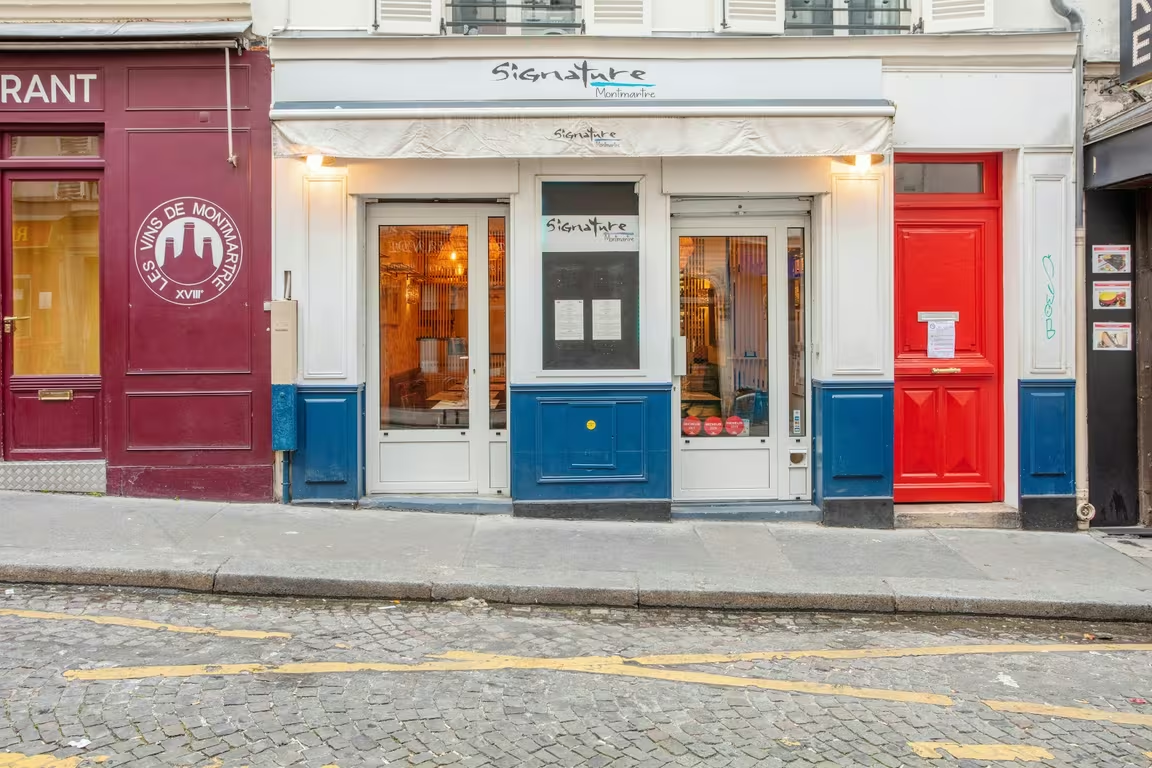
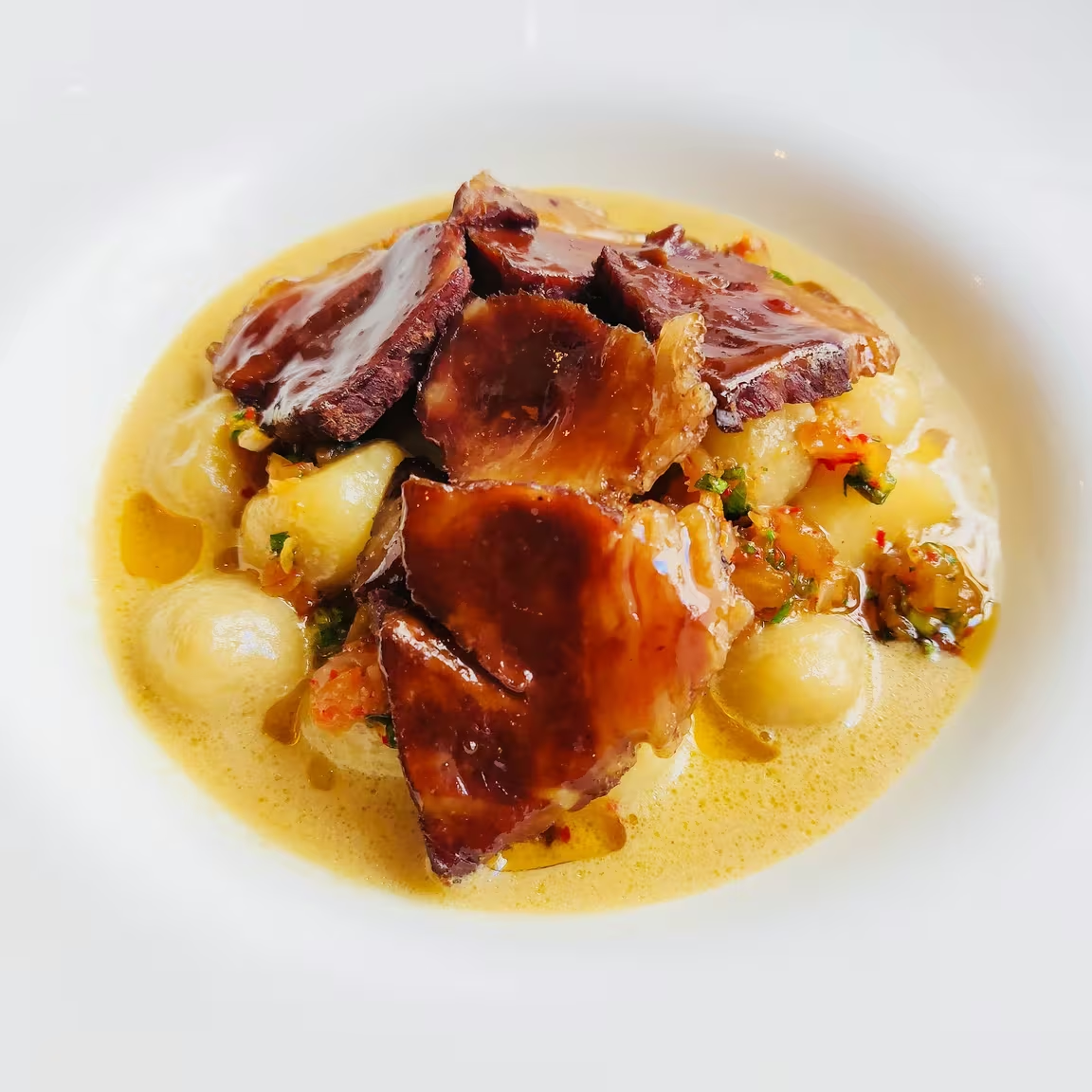
Signature, a Franco-Korean bistro tucked away in Montmartre, is a culinary gem where Victor and Lim Kim offer a bold fusion cuisine. Their subtle combinations marry French and Korean traditions with remarkable elegance. The menu changes seasonally, highlighting carefully sourced products like Pornic pigeon. The sweet section, orchestrated by Youngrim Kim, reveals stunning desserts where Korean ingredients are delicately introduced - fig tart, jujube cream. Victor's warm welcome, wine recommendations, and intimate atmosphere make each meal a memorable experience.
Mentions
Signature Montmartre – Paris - a MICHELIN Guide Restaurant
Located in touristy Montmartre, this Lilliputian restaurant sports a minimalist interior and a buzzy vibe. At the helm of the restaurant, that is fully deserving of its success, is a Franco-Korean couple (bookings highly recommended). He warmly welcomes diners, proffering insightful wine tips along the way, while she deploys her pastry talents in the kitchen. The Franco-Asian repertory quietly feeds you well, courtesy of intelligent recipes scattered in subtle aromas, illustrated by a tataki of bonito with cucumber pickles, a watercress crepe and a vitello tonnato sauce jazzed up with mint – flavoursome and surprising! Consider us smitten! Monday closed Tuesday closed Wednesday 19:00-23:00 Thursday 19:00-23:00 Friday 19:00-23:00 Saturday 19:00-23:00 Sunday 19:00-23:00
guide.michelin.com
Signature Montmartre - Restaurant - Paris
12/20 Table Gourmande L'association de Victor en salle et de Lim Kim en cuisine ne pouvait donner qu'une fusion franco-asiatique intéressante. Dans ce cadre épuré où les tables sont bien espacées, la tendance est à une cuisine française voyageuse et curieuse d'autres sources : anguille fumée, chou chinois lactofermenté, sauce saté, crème fraîche citronnée, sauce pimentée, radis noir, livèche, une belle réussite révélant l'umami, bœuf, purée de panais, pomme de terre, carotte jaune, roquette sauvage et jus de bœuf, un plat alléchant et un peu moins expressif, avant un dessert typique et peu consistant pour une fin de repas, chou craquelin, pâte de haricot noir et guimauve. Victor est très présent, toujours disponible pour un conseil ou une proposition, et la cave est simple, assez coûteuse au verre (12 €). LIRE LA SUITE... LIRE MOINS...
fr.gaultmillau.com
How Paris's Asian food and culture scene is changing – and the address to know right now
In September, hours after landing in Paris, I headed straight to Signature Montmartre, a French Korean bistro that friends had been lavishing with praise. Already, this is a series of words I find startling. I had lived and worked in Paris for a while during college; I go back when I can, and until this trip, I didn’t recall noticing a Korean shop or restaurant here. The bistro’s lights shone from large windows like an inviting beacon, guiding me to food that was, as reported, astonishing: French cuisine shot through with distinctly Korean flavours, such as tender prawn-filled perilla in a curry aioli, followed by a fig tart with jujube cream, one of the most delicate, fascinating pastries I’ve ever had. I talked about all of this with Signature Montmartre’s pastry chef, Youngrim Kim. We spoke in Korean, ringed by convivial diners conversing in French. “As Korea’s culture has become more known in the world, there’s been an explosive growth of Korean food in Paris,” said Kim. “People come in asking for kimchi.” It hasn’t been at all easy, though, to bring Korean ingredients into a pastry such as the fig tart, which in Paris is generally considered to be French, period, with little space for chefs diverging from expected flavours. People still baulk at hints of spiciness in a pastry, said Kim, let alone staples such as doenjang, a soya bean paste, or gochugaru, a powder made of dried chillies. But Kim persists, and hallelujah. This would turn out to be a leitmotif of the trip: French Asian artists, chefs and others are making increasingly celebrated creations, and doing so in ways that let them be seen, eaten and experienced outside the boxes of their compatriots’ expectations. I’d last visited Paris in 2019. Since then, I’d heard and read of a striking rise in the prominence of Asian food, art and fashion in the city. France has fraught historical relationships with East and Southeast Asian countries and cultures, and by fraught I also mean colonial. Vietnam, Cambodia, Laos and other parts of Asia are former French colonies. In my own experiences of Paris, I’d witnessed very little celebration of anything Asian, the sole exception being a long-standing respect for and obsession with Japan’s cultural products, which could include, to my eye and to Asian peers, notes of fetishisation. This new focus on Asian food cultures sounded, perhaps, different. In conversation, Parisians had suggested that this change was a reflection of the times: the more global awareness of millennials and Gen Z’ers, as well as the exposure to other cultures and cuisines on social media, has softened the Parisian stubbornness to keep white France the focus. The change seemed considerable. During this year’s Fashion Week, for instance, the superstars of Paris’s shows were K-pop idols. In 2015, Paris began hosting an annual art fair called Asia Now, bringing together work from contemporary Asian artists, which, at last count, had hosted 65 galleries and more than 200 artists from 26 countries. Friends said some of the restaurants they’d most loved were helmed by chefs who were Filipina, Korean, Chinese, Vietnamese and Cambodian. I was intrigued by what I was hearing. Intrigued but with mixed feelings. Paris is, unoriginally enough, a city I deeply love. It’s also a city where I’ve contended with frequent and vocal racism – more, perhaps, than in any other city I’ve lived in. I grew up in a part of the United States with a plurality of Asians, and Paris is where I began learning first-hand just how exotic I can look to some white people. Nowhere else have I been catcalled so often with hollers of “Ni hao!” and “Konnichiwa!” – salutes in languages I don’t speak. At Pho Tài, a cherished Vietnamese restaurant beloved by diners from diasporic Vietnamese people to star chef Alain Ducasse, I met Grace Ly to discuss these complexities. Ly is a French Cambodian and Chinese activist, writer and podcast host who has written extensively about Asian cuisines in Paris. On her recommendation, I ordered pho satay, a bewitching soup with beef, garlic and peanuts. It was remarkable, its flavours so gorgeously layered that I’ve thought about it every day since. I asked Ly about the recent surge in the popularity of Asian restaurants and culture. When I lived in Paris, I used to get so desperate for the occasional proximate dose of Korean flavours that, at times, I’d nibble on plain garlic and spring onions. On this trip, delighted and bewildered, I began taking photos of all the signs I saw in Hangul; K-pop alone, I thought, couldn’t explain this proliferation. “Tourism being essential to the country, the image of French gastronomy is preserved in a traditional way,” said Ly. But more recently, and with the rise of social media, “France could no longer resist the ascension of East and Southeast Asian food on the global scene,” along with excellent cuisines from other parts of the world. “We no longer need traditional journalists to prescribe trends, and that’s made all the difference: peers recommend joints that do not need validation by the dominant culture.” Similar dynamics are driving a rising interest in contemporary Asian art. Asia Now has grown rapidly from its first incarnation in 2015, when it had just 18 galleries. And George Chen, a San Francisco restaurateur, is scheduled to open a massive multistorey food emporium called Asia Live in the Carrousel du Louvre shopping centre. From as early as 2024, people will be able to stop for dim sum and roast duck before proceeding to look at, say, Théodore Géricault’s painting The Raft of the Medusa. I visited several galleries that have taken part in Asia Now. At the first one, A2Z Gallery, I stood for a long time, desperately moved, in front of a vast all-black painting by Bao Vuong. He’d left Vietnam in the late 1970s as a refugee with his family, and this work depicted a luminous impasto ocean at night. If I could have, I’d have bought it on the spot; I did not want to leave it behind. A second space, Galerie Marguo, hosted Chinese artist Xie Fan’s first solo exhibition in Europe, and I was enthralled by shimmering paintings that layered gold foil and oil on terracotta panels. In conversations with French Asian people, I kept hearing that, while existing prejudices are thriving, the work of a growing cohort of creative Asians has become increasingly visible. Kim Lê, a French-born ceramist whose studio has captivating earth-toned vases, urns and other pottery, said a great hope is that her wares will be able to be seen without cliché-riddled racial filters. Another prominent example is Céline Chung, a Paris-born restaurateur who has opened four thriving eateries in the city. I met her in Bao Express, a vast dim sum parlour that launched this year. Asked if she had a guiding philosophy behind her restaurants, Chung listed the painful stereotypes of Chinese cuisine she’d heard growing up: “It’s cheap, it’s very oily, the restaurants aren’t clean.” So she’s paid close attention to details of decor and architecture, and frequently relies on organic products. Bao Express has an open kitchen so that her patrons – who include diasporic Asians, other Parisians and tourists – can watch the chefs’ craft. Khánh-Ly Huynh, who won the blockbuster televised cooking competition MasterChef France in 2015, has also grappled with limiting ideas of what Vietnamese food can and should be. I stopped by Nonette Bánh Mì & Donuts, Huynh’s lauded takeaway place, to try its eponymous goods. Her signature đặc biệt sandwich, with five types of meat, butter and exquisite pickles prepared in-house, was magnificent: the most complex, nuanced bánh mì I’ve tasted during a lifetime’s single-minded pursuit of delicious versions. Nonette offers several kinds, including for vegetarians and vegans. “Bánh mì is a super-fluid theme in Vietnam,” she said, open to infinite variations – much like, say, pizza. “Everybody likes to put you in a category,” said Moko Hiray
cntraveller.com